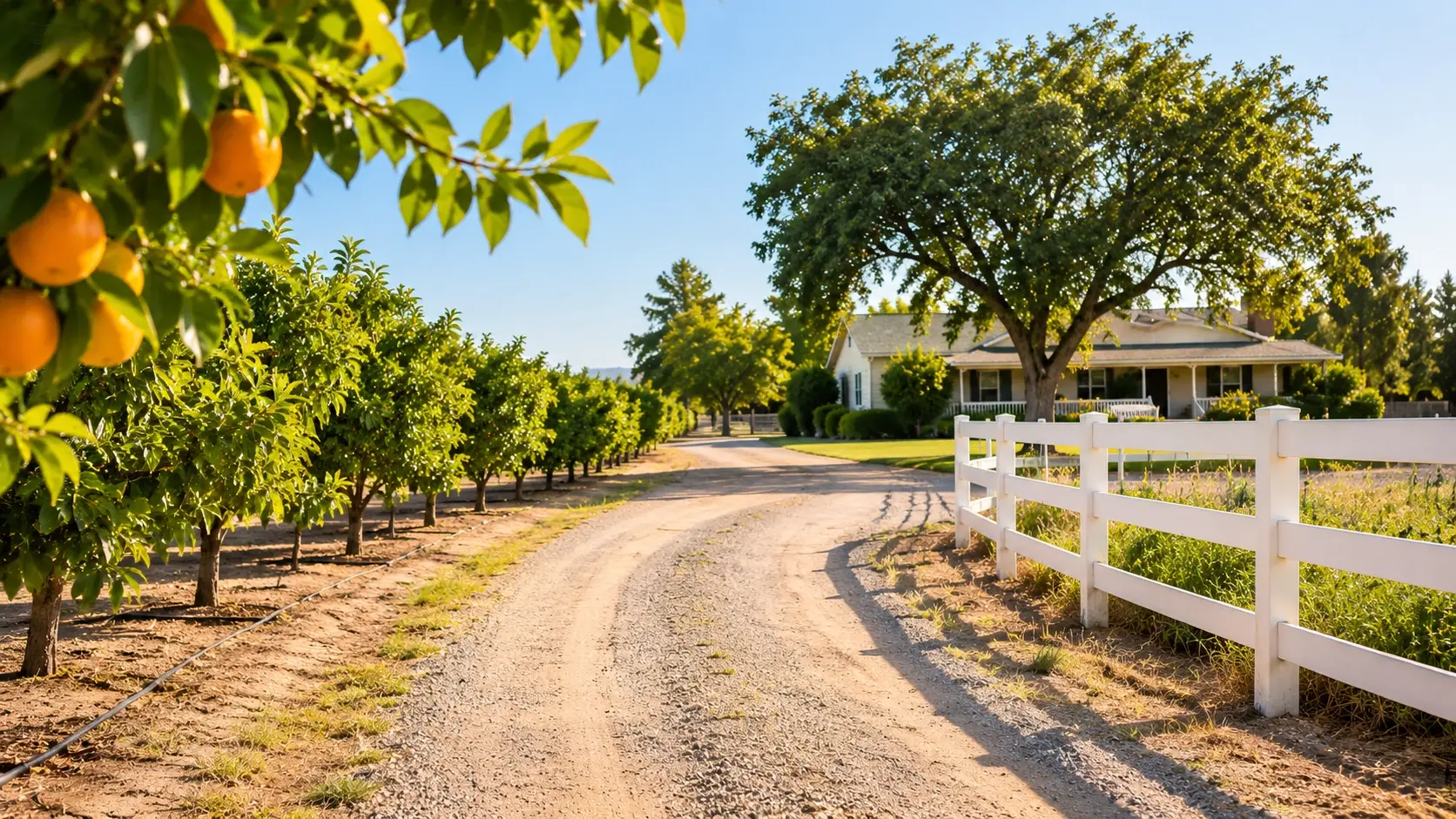
A road leading to a rural property can make access seem obvious. You can see the entrance, follow the driveway, and reach the home or land during a showing. Yet physical access and documented rights are different questions. Before buying Central Valley rural property, investigate both the route you can travel today and the rights, restrictions, and responsibilities that may affect its continued use.
This review is especially useful when a search extends beyond town streets into properties around Fresno, Kingsburg, Fowler, Selma, or other communities Tomas serves. The goal is not to assume rural access is problematic. It is to identify the actual route, understand the relevant documents, and ask qualified professionals whether the arrangement supports your intended use. A scenic entrance should be evaluated with the same care as the rest of the purchase.
Start by describing the access you expect to need
Write down how you intend to use the property before reviewing the documents. Daily residential travel, occasional deliveries, agricultural activity, and access by service providers can raise different practical questions. Describe what matters to your plans without assuming those activities are authorized. This gives your title professional, attorney, and other advisers a concrete basis for evaluating the records.
Consider who would use the route and why. You may need visitors to locate the entrance, a contractor to reach a building, or equipment to access a particular part of the parcel. Those needs should be discussed in terms of the specific property. Avoid treating an existing seller’s habits as proof that every activity you envision is allowed or that the same arrangement will continue unchanged.
Also identify any alternative route shown in listing materials or described during a visit. Ask whether it is a recognized access route, an informal convenience, or something requiring further investigation. Keep the distinction visible in your notes. A second gate or track across neighboring land should not quietly become part of your purchase assumptions without appropriate documentation and professional review.
Trace the route from the public road to the property
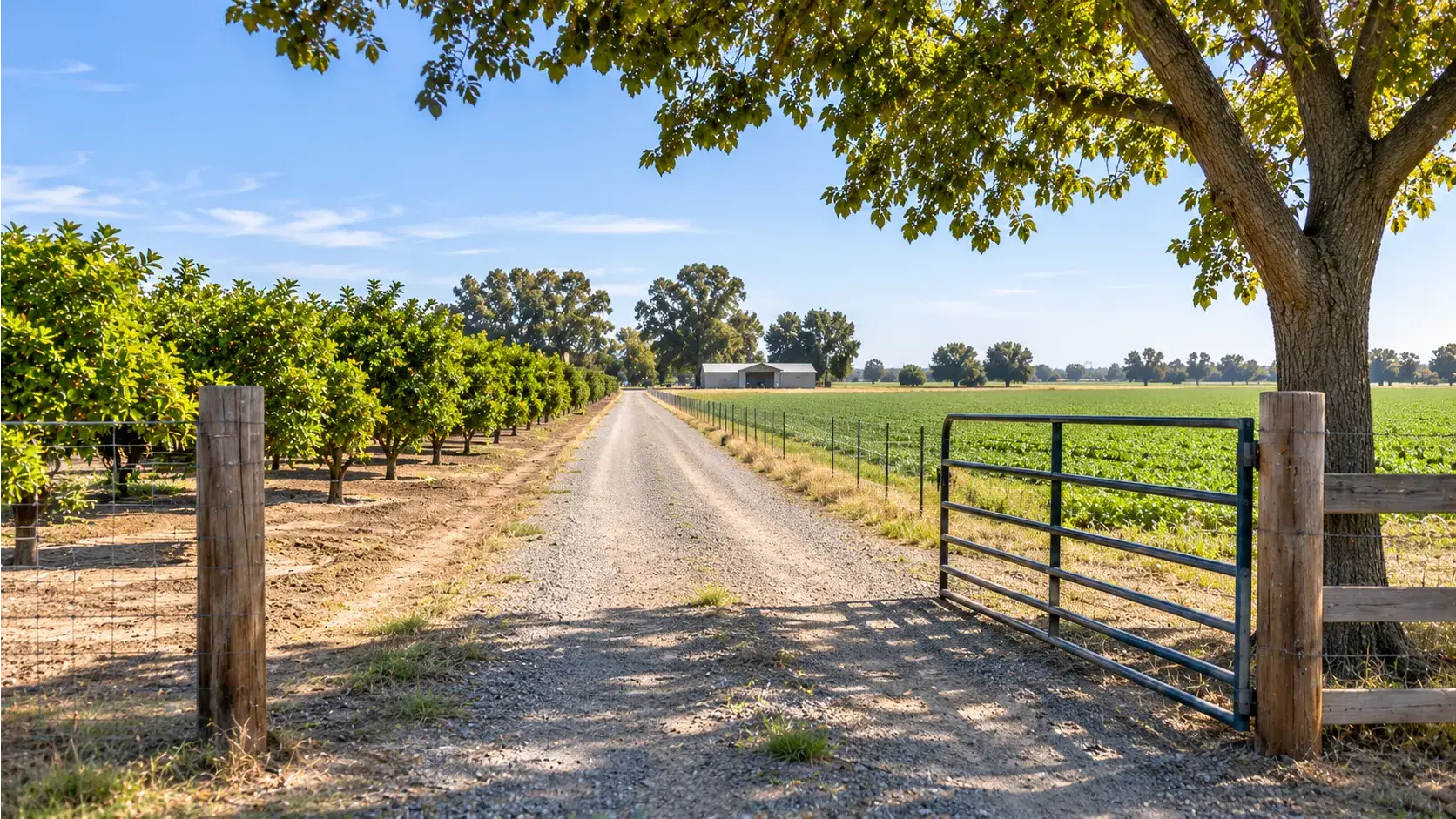
With authorized access, observe the route used for the showing and note where questions arise. Is there a shared entrance, a gate, a change in road surface, or a portion that appears to cross another parcel? These observations help frame the review. They do not establish ownership, boundaries, or legal rights, and they should not lead you to enter neighboring land without permission.
Ask the seller and transaction team for available maps, agreements, surveys, and information about road use. Compare the physical route with the documents through qualified professionals. If the two appear different, seek clarification rather than assuming the paperwork is outdated or the visible road is legally sufficient. A discrepancy is a question to resolve, not a conclusion about the property’s rights.
Identify the agency responsible for any road described as public, and ask that agency to confirm relevant status or maintenance information. A road name, a map label, or regular public use does not by itself answer every question. For private portions, ask which written arrangements govern access and responsibilities. Keep public and private segments distinct so that an answer about one does not get applied to the entire route.
Read the preliminary title report with supporting documents
The California Land Title Association explains that a preliminary title report identifies matters relevant to the proposed title coverage, including exceptions. The report should be reviewed with the title professional and, where appropriate, a qualified attorney. Request the underlying documents for items that may affect access rather than relying only on a brief description or document reference in the report.
An easement generally grants a defined right to use property belonging to another for a stated purpose. Its practical meaning depends on the actual document and circumstances. Ask who benefits, which land is affected, what use is described, and whether any conditions need legal interpretation. A buyer should not assume every easement provides the same scope or that a general access reference authorizes every planned activity.
Keep a document list that matches each title item to the full recorded material received. If a referenced document is missing or difficult to read, request a usable copy. If the language is unclear, ask for professional interpretation. The purpose is to understand what affects your purchase, not to become comfortable with a summary that no one has connected to the route on the ground.
Do not confuse a map with a boundary conclusion
An online parcel image can help orient a discussion but should not be treated as a survey or a definitive depiction of every easement. Ask a qualified surveyor what information is needed to locate relevant boundaries and rights on the site. Fences, wheel tracks, landscaping, and gates may be useful observations, but their physical position alone does not settle the legal boundary or access question.
Ask who maintains the road and how decisions are made
Access rights and maintenance responsibilities deserve separate attention. Ask for any written road maintenance agreement and have the appropriate adviser explain it. Find out how work is proposed, how responsibilities are allocated, and how disagreements are addressed under the actual arrangement. Do not assume that equal use automatically means equal expense or that a neighbor’s voluntary contribution creates a permanent obligation.
Request available records of recent work, recurring issues, and any planned project. Distinguish routine upkeep from a proposed larger improvement. A conversation that “everyone usually helps” may describe past practice without resolving future responsibilities. Your review should identify what is documented, what is informal, and what remains uncertain so you can decide whether the arrangement fits your expectations.
Ask practical questions about the current condition through qualified providers. If you anticipate a delivery or construction project, have the appropriate professional assess what access would be required and whether further permissions are needed. Do not personally test a route with unsuitable equipment or assume that successful passage by one vehicle proves suitability for another. Keep physical evaluation and legal authorization coordinated but distinct.
Investigate shared gates and everyday coordination
A shared gate can be a small convenience or a significant coordination point depending on the arrangement. Ask who controls it, how authorized users obtain access, and what the documents say about its operation or changes. Avoid relying on a seller’s personal relationship with a neighbor as the only explanation of how you will use the entrance after closing.
Discuss how service providers and other authorized visitors reach the property. The question is not whether someone can improvise a solution on moving day; it is whether the existing arrangement supports ordinary ownership under the applicable rights and rules. If an access procedure depends on equipment, codes, or accounts, plan a secure handoff and confirm who is responsible for maintaining the relevant components.
Keep neighbor conversations respectful and route formal requests through the transaction team as appropriate. A friendly discussion can supply context, but it should not be treated as a legal amendment or a substitute for recorded information. If a proposed change requires agreement or professional documentation, have it handled correctly before assuming it is available to you as the buyer.
Connect access review to your financing and insurance
Share relevant access information with the lender and insurance professional through their requested process. Ask whether they need documents, further evaluation, or clarification before making a final determination. Do not assume that a property being listed for sale means it meets every lender’s or insurer’s requirements. Their reviews may address different issues from your own practical assessment of the route.
Tomas’s home buyer guide offers a broader framework for the transaction. Rural access review should fit within that schedule rather than becoming an isolated research project. Tell your agent early which questions could affect your willingness to proceed, and coordinate title, legal, survey, lender, and insurance work so that each participant knows what is still unresolved.
If further investigation takes time, discuss the effect on the purchase agreement and any relevant deadlines. A pending survey or unanswered title question does not automatically change the contract. Ask how additional time or other responses would be requested and documented. Avoid assuming that an important concern creates a particular remedy without reviewing the agreement and obtaining appropriate advice.
Use a written access summary to make the decision
Before deciding, assemble a concise summary of the route, supporting documents, professional findings, and remaining questions. Separate physical condition, legal rights, maintenance responsibilities, and administrative requirements. Each category should identify what is confirmed and by whom. This makes it harder for one reassuring observation, such as a freshly graded road, to obscure an unresolved question in another category.
Imagine a buyer considering land near Kingsburg who can readily reach the parcel but plans to use larger equipment. The important next step is to review whether both the documented rights and the route’s evaluated condition support that intended use. A seller’s statement that ordinary vehicles have always passed does not settle the new question. The buyer needs evidence matched to the proposed activity.
Tomas’s service-area overview can help orient a search across the Central Valley communities he serves. As the search moves from town homes to rural parcels, keep the investigation tied to the property instead of assuming a single access pattern applies everywhere. Location helps define where you want to look; documents and qualified evaluation help explain what ownership would involve.
Preserve the arrangement after closing
If you proceed, retain the relevant title materials, recorded agreements, survey information, professional correspondence, and authorized access details in a permanent property file. Ask which documents should be supplied to future contractors or advisers when planning work. A clear file prevents later decisions from being based solely on a remembered showing route or an informal description from the sale.
Before changing a gate, widening a route, or using a different path, obtain appropriate guidance about the rights and permissions involved. Ownership of the destination parcel does not answer every question about land crossed along the way. The value of a thorough purchase review is that it gives you a documented starting point for these future decisions and a clearer understanding of the responsibilities you accepted.
FAQs
Does a visible driveway prove legal access?
No. Review the relevant title and recorded documents with qualified professionals, and compare them with the actual route.
Does an easement automatically explain road maintenance?
Not necessarily. Ask which documents govern maintenance, costs, and decision-making for the specific arrangement.
Can an online parcel map replace a survey?
Do not treat it that way. A qualified surveyor can explain what is needed to locate relevant boundaries and rights on the site.
Contact Tomas Flores
Considering rural property in the Central Valley? Contact Tomas Flores at 559-215-7836 to discuss your intended use and coordinate a property-specific access review.