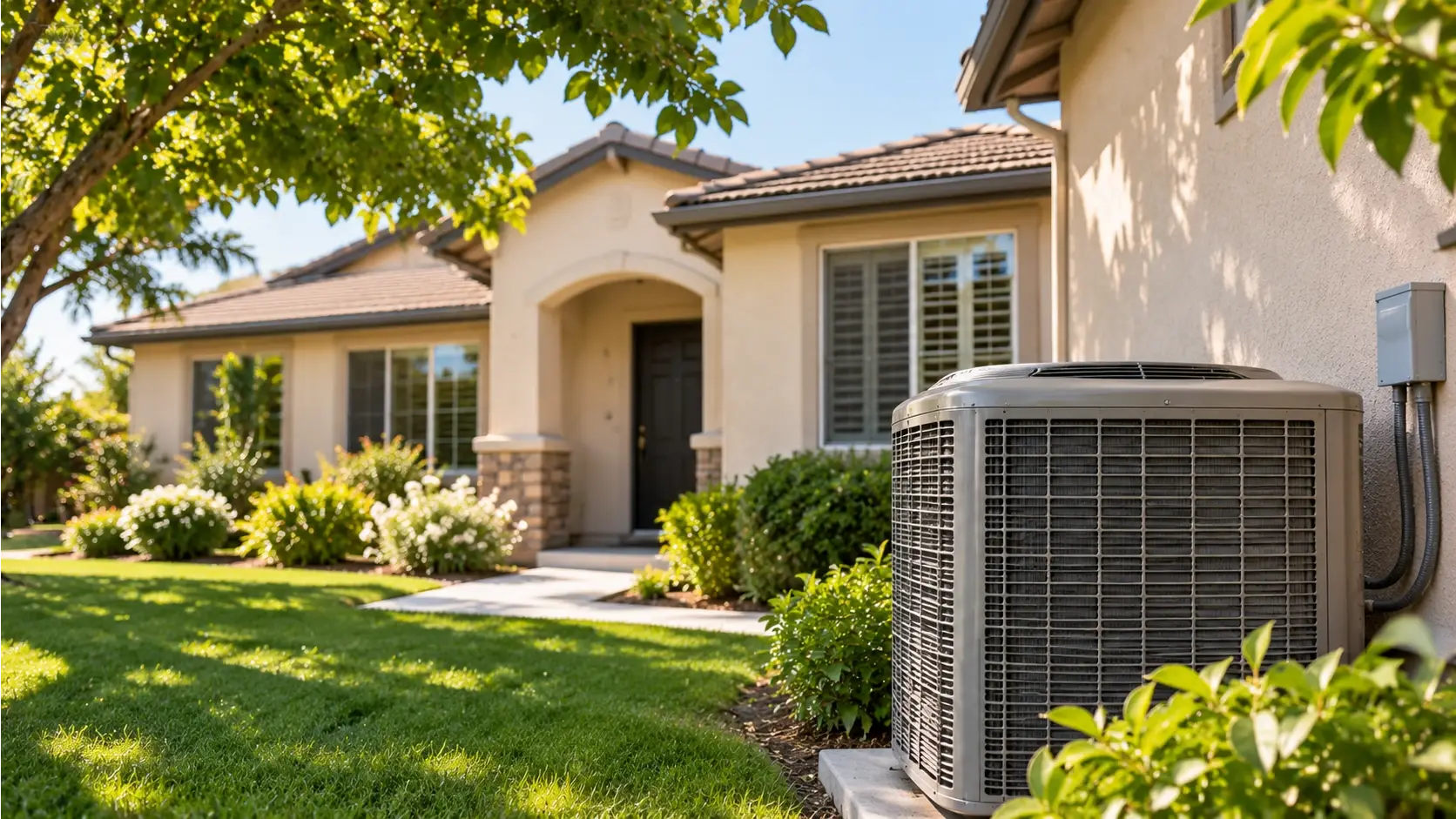
A comfortable showing can leave a strong impression during a Fresno home search. You walk inside, notice cool air, and move on to the kitchen or backyard. Yet a brief visit cannot explain how the home performs across different rooms, conditions, and routines. Evaluating cooling requires more than checking the thermostat display or accepting a listing description that calls the system efficient.
The useful question is how the equipment, building, and your intended use fit together. You are not expected to diagnose a system yourself. Instead, gather the right records, describe what you observe, and arrange qualified evaluation of questions that matter to the purchase. That approach works whether you are considering a home near River Park, the Tower District, or elsewhere in Fresno.
Describe what comfort means for your household
Begin with your ordinary schedule. Will someone use a particular room throughout the day? Do you work from home, prefer certain sleeping conditions, or expect several rooms to be occupied at once? These details can help frame a professional conversation about comfort. They also prevent the entire review from centering on the temperature in one living room during a short appointment.
Identify spaces that are central to your plans. A room you intend to use as an office deserves attention even if it was lightly used by the seller. An enclosed area shown as flexible space may need further questions about its approved use and conditioning. Do not assume that every room described in marketing material has the same system coverage or documented status.
Write observations in neutral language. “This room felt warmer during the visit” is a useful note. “The system is undersized” is a technical conclusion you may not be qualified to make. A good observation records the place, approximate conditions, and question for the inspector. This gives a professional something to investigate without anchoring the discussion to an unverified diagnosis.
Identify the equipment that actually serves the home
Ask the seller for available equipment information, installation records, service invoices, and warranty documents. Have the inspector or qualified HVAC contractor identify the systems and explain which spaces they serve. A property may have more than one unit or a combination of equipment. The visible outdoor component alone may not tell you how the whole home is conditioned.
Keep installation dates and component replacements distinct. A newer outdoor unit does not necessarily mean every related component was replaced at the same time. Read invoices for the actual scope, and ask a qualified professional to clarify any mismatch between the documents and what is installed. Avoid treating a phrase such as “new AC” as a complete technical specification.
Do the same with warranties. Ask what documentation is available, whether any transfer process applies, and what the warranty actually addresses. A warranty is separate from a current condition assessment and does not guarantee that every future expense will be covered. Keep account or registration questions with the appropriate provider, and keep observed equipment concerns with the evaluating professional.
Arrange an inspection that can answer your questions
Confirm the home inspector’s scope before the visit. Ask what cooling-system checks are included, what conditions may limit operation, and when specialist evaluation is recommended. The answer should explain the service you are purchasing. It should not be inferred from a report template or a general assumption that a home inspection includes every possible performance test.
If a system cannot be meaningfully evaluated under the conditions present, ask how that limitation will be documented and what follow-up is appropriate. Do not treat “not tested” as the same as “working properly.” Likewise, a system operating during the inspection does not establish how it will perform under every future condition. Ask the professional to explain the scope and limits of the findings.
Tomas’s home buyer guide places inspections within the larger purchase process. Arrange technical follow-up early enough to discuss findings and contract-specific options with your agent. A specialist’s availability, the seller’s access arrangements, and the transaction’s deadlines all affect scheduling. Unanswered equipment questions deserve a clear plan instead of being postponed until the final walkthrough.
Bring observations rather than testing equipment yourself
Share your notes about rooms, sounds, or visible conditions with the inspector. Do not remove panels, reach into equipment, or attempt electrical or refrigerant work. Qualified professionals should perform tests and explain the results. Your role is to communicate what matters to your use of the home and decide what further information you need before accepting the property’s condition.
Consider the building as well as the machinery
Ask the evaluating professional whether the home’s windows, shading, insulation, air distribution, or other building conditions warrant additional review. Cooling comfort involves the space being served, not just the nameplate on a unit. A large system does not automatically resolve every comfort issue. The Department of Energy emphasizes proper sizing based on the building’s needs rather than simply choosing greater capacity.
If replacement is being considered, request an explanation of how the proposed equipment would be selected for this home. A quote that repeats the size of the existing unit may not answer every relevant question. Let the qualified contractor identify the appropriate evaluation and assumptions. Avoid selecting a replacement solely from a generalized online rule or the idea that a more powerful system must be better.
For a Fresno home with an addition or changed room arrangement, ask whether the available records explain how the work affected heating and cooling. The question is specific to the property, not to the neighborhood’s reputation or age. A comfortable main room and a less comfortable added space may need different investigation. Document the distinction so it is not lost in an overall statement that the house “has air conditioning.”
Read the service history for context
Look for the dates and scope of past visits rather than counting the number of receipts. Routine maintenance, diagnosis, and repair are different activities. A file with several service records can help reveal what was addressed and what remains uncertain, but it does not by itself prove current condition. Send relevant records to the professional performing the evaluation.
ENERGY STAR recommends regular professional maintenance and attention to filters as part of caring for heating and cooling equipment. For a buyer, the practical application is to ask what maintenance the installed system requires and whether the available history helps explain its condition. Follow manufacturer and professional guidance after purchase rather than assuming a generic checklist fits every installation or taking on work beyond your experience.
If the seller reports a recurring issue, request a factual description and any related documentation. Ask whether the last visit resolved the reported concern or merely identified a next step. A recommendation for further work should remain visible even if a separate component was repaired. The history is most useful when it preserves the sequence rather than reducing everything to “serviced recently.”
Use energy bills carefully
Available utility statements can add context, especially when they cover a meaningful period and the seller explains unusual circumstances. Confirm which accounts and dates are represented. A single bill may reflect vacancy, a particular season, a payment adjustment, or a different household routine. It should not be used as a precise forecast for your own ownership.
Ask how solar, other major equipment, or changes in occupancy affected the records if those factors are relevant. Keep the explanation tied to what can actually be documented. You do not need to reproduce the seller’s lifestyle to buy the home, but you should recognize why the historical amount may differ from your future charges. Avoid a promised savings calculation that rests on unverified assumptions.
For comparisons, create the same categories for each home: available history, equipment information, inspection findings, and questions remaining. This is more useful than ranking properties by the lowest bill screenshot. If operating expense is central to affordability, discuss the information with qualified professionals and your financial advisers. The final decision should account for uncertainty rather than treating historical usage as a guaranteed ceiling.
Turn a recommendation into a usable scope
When an inspection recommends service, repair, or replacement, ask what further information is needed to estimate the work. A broad report phrase may not be a complete contractor’s scope. Obtain a property-specific proposal when the potential expense matters to your decision, and ask what is included, excluded, or dependent on additional investigation. Compare proposals on scope as well as price.
Keep optional improvements separate from identified concerns. You may prefer a different thermostat or a quieter arrangement even when the existing system is operating within the evaluated scope. Those preferences can matter to your budget, but they should not be confused with a professional finding. Clear categories help your agent discuss negotiations without overstating either the condition or the work you would personally like to undertake.
Imagine a buyer who receives a recommendation to investigate uneven cooling. A useful next step is a qualified assessment that explains the issue and possible responses. Immediately assuming the entire system needs replacement may be premature, while dismissing the concern may leave an important question unanswered. The decision becomes clearer when the scope follows evidence rather than the buyer’s first guess.
Plan a practical ownership handoff
Collect manuals, service contacts, available warranties, and records of any agreed work before the transition is complete. Ask how connected controls will be transferred securely and whether the seller’s accounts need to be removed. An orientation can explain normal operation, but it should not replace an earlier condition review. Make sure unresolved commitments are handled through the transaction team rather than an informal promise to send paperwork later.
Keep a record of the professional recommendations you accepted and the maintenance questions to address after closing. If an inspection was limited, preserve that limitation in your file rather than rewriting it as a clean bill of health. This allows your future service provider to understand what has and has not been evaluated and helps you organize follow-up without relying on memory.
As you refine your search, learning more about Tomas Flores can help you begin a conversation about the practical features that matter to you. Cooling should be part of that brief alongside layout, location, and condition. A careful review will not promise perfect comfort under every circumstance, but it can make your Fresno purchase decision more informed and your next steps more manageable.
FAQs
Is a newer air conditioner enough to establish good cooling?
No. Ask a qualified professional to evaluate the installed system, its condition, and relevant building or distribution questions.
Can I predict my bills from the seller’s statements?
Use them as historical context. Your usage and circumstances may differ, and one statement is not a reliable forecast.
What if the inspector cannot test the equipment fully?
Ask how the limitation affects the findings and what follow-up is appropriate. Do not treat an untested component as approved.
Contact Tomas Flores
Comparing Fresno homes and their everyday comfort? Contact Tomas Flores at 559-215-7836 to discuss your priorities and coordinate property-specific inspection questions.